

KUMROVEC
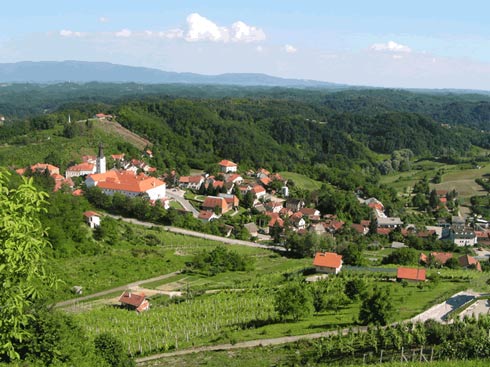
Kumrovec - a small village in the Croatian Zagorje known by many for being the place where Josip Broz Tito was born. This beautiful Zagorje village is situated on the wooded banks of the river Sutla which runs alongside the border with Slovenia.
Under his name in written references Kumrovec first appeared in 1463., And as one of the properties Cesergrada, already in 14th century, in possesion of Celje counts. Meaning of name Kumrovec probably derives from the word "kumerni" which means poor, miserable and unwilling people, how feudal called their serfs. There is another view that the name is derived from the word Kumrovec "Kumra" Celtic word meaning "mud," a word that is well-described state of the country and the roads in the valley of the river Sutla. From the same source and the same meaning is created and the name of the stream and the village Skrnik.
Kumrovec - a small village in the Croatian Zagorje known by many for being the place where Josip Broz Tito was born. This beautiful Zagorje village is situated on the wooded banks of the river Sutla which runs alongside the border with Slovenia.
The old village – Kumrovec ethno village is one of the most attractive of its kind in Croatia - a unique open-air museum which has preserved the original traditional houses built on the cusp of the 19th and 20th centuries. Visitors can look at the permanent ethnological collection of traditional ways of life such as: the Zagorje marriage, the Life of the Young Married Couple, From hemp to linen, Farriery, Carth-wright's Crafts, Pottery, From Grain to Bread, etc.
ETHNO VILLAGE KUMROVEC
In the west part of Krapina-Zagorje County, in the village of Kumrovec, you will find the Old Village Museum (Kumrovec Ethno Village), a unique outdoor museum with preserved original village houses from the turn of the 19th and 20th centuries.
The history of the Old Village began by the mounting of the monument in front of the birth house of Josip Broz Tito in 1948. The place where the former president of Yugoslavia, a war hero and one of the most popular leaders on the global political scene in the second half of the 20th century now offers a museum with a historical and ethnological collection. Around 40 more residential, farming and ancillary buildings were subsequently renovated in the village. The visitors can se the permanent ethnological collections of the traditional lifestyle from the late 19th century, such as: Zagorje Wedding, The Life of a Young Married Couple, From Hemp to Canvass, The Blacksmith’s Trade, Wagon-Maker’s Trade, Pottery, From Grain to Bread
Image gallery Order photographs
Location
By clicking "How to get there" Google maps will open. Insert your starting adress and click "Get directions". A datailed printable plan will appear.