OZALJ HERITAGE MUSEUM
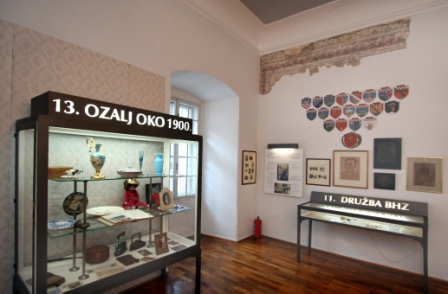
The Ozalj Heritage Museum is located in the Old Town of Ozalj. Its structure reflects a 6,000 year history that can be tracked by means of written records and archaeological artefacts.
The Ozalj Heritage Museum is located in the Old Town of Ozalj. Its structure reflects a 6,000 year history that can be tracked by means of written records and archaeological artefacts.
Ozalj Regional Museum
In this museum, history begins with the Late Stone Age, the Eneolithic period, the Roman period and the migration of nations. It also covers the early Middle Ages and the story of big families with a special emphasis on the Frankopan and 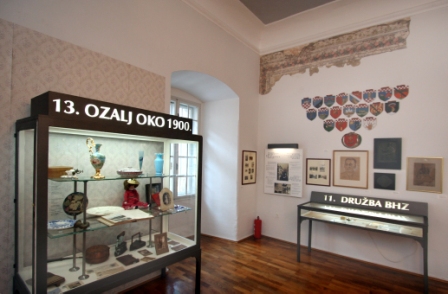 the Zrinski families as well as the Ozalj cultural circle. The collection of weapons from the time when the last Zrinski fought against the Turks continues with the baroque period and the period of the Brethren of the Croatian Dragon who in 1928 became the owners of the Old Town of Ozalj and who organized a special collection in the thirties, as a “museum within a museum”. And of course, a special section is dedicated to Slava Raškaj, the Ozalj painter whose watercolours represent the highest level of Croatian watercolour painting of the late 19th and early 20th century. The story told in the historical sections also includes the regional history up until the end of World War I i.e. until 1918 – the story of the Pauline order in the monastery in Svetice, construction of the hydro-power plant “Munjara” in 1908, construction of the railway in 1913, emigration to the United States, education and more.
Ozalj Regional Museum in the Old Town of Ozalj
Telephone: +385 (0) 47 732 271
Working hours: Mon-Fri: 08:00 - 20:00
Sat-Sun: 10:00 - 20:00
Ethno park Ozalj
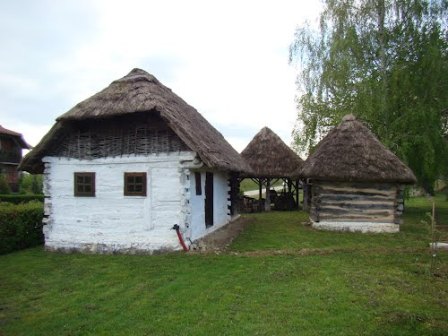
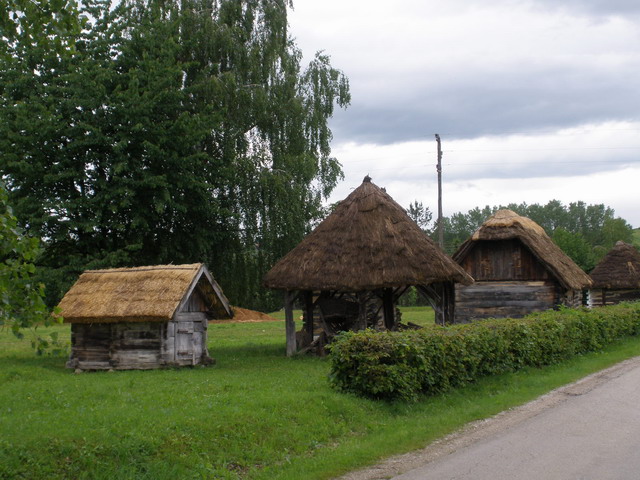 A picturesque Ethnic Park created with the aim of preserving the cultural heritage, especially architecture, is located along the road towards the village of Trg, less than 1 km from the centre of Ozalj. It is an open museum and a part of the Ethnographic section within the Ozalj Heritage Museum. The Ethnic Park features the traditional architecture and everyday tools of the pre-industrial era. It is organized as an open space collection of residential and business buildings, interiors of low cottage peasant rooms, kitchens and storage areas with authentic inventory, all under professional guidance and monitoring. The cottage roofs covered with rye-straw, so-called škopa, and buildings of hewn wooden beams with so called hrvaški vugli (Croatian corners) are characteristic and represent rare examples of traditional village building.
The methodically built medieval village Trg (the Town Square) is mentioned in 1329 in the charter of Viceroy Mikac. Due to its geographic location, historical development and preserved traditions, it is a unique village in northern Croatia. It is situated on the right bank of the Kupa River, at the band made by its meandering course.
The location of Trg is closely connected to the position of Ozalj that, as an important strategic fort, guarded against access from the Kupa valley into the economically significant Pokupska valley, but it did not provide sufficient protection to residents living beneath the fort. During the first half of the 14th century, it was decided that the unprotected Ozalj population should be relocated to an area suitable for defence – the meander, i.e. the peninsula of the Kupa River. This area was actually an island due to an artificial canal, and was known as “the Ključ (Key) island, also known as the island of All Saints”, as it was called in the old records of the former village Trg. Today, the historic centre is only partially preserved in the central part, near the Church of All Saints, first mentioned as early as 1334. The traditional architecture of cottages of hewn beams with hrvaški vugao na križanke (Croatian cross-corners) and straw roofs is still visible in the upper part of the village Trg.
 Jalba is the headgear (cap) worn by married women in villages along the Kupa between Ozalj and Karlovac. It is made of elastic material of porous structure with a special knitting technique (mutual interlocking system) on an upright wooden arch - lucanj. The required motifs are obtained by knitting only with fingers, and two laces (jalbas) are produced simultaneously with only one knitting.
In Trg, where headgears are very characteristic, the traditional craft of knitting jalba on lucanj was kept up longer than anywhere else. In fact, women from Trg wear jalba on rogi (horns). Wooden inserts are placed on a head and covered with poculica, called jalba with perforated patterns, after which everything is covered with a scarf.
The traditional art of knitting jalba is intangible cultural heritage under the Act on Protection and Preservation of Cultural Heritage of the Republic of Croatia, and as such is included in the List of Protected Cultural Heritage.
The Cultural Artistic Society “Ključ” from Trg is in charge of preserving the jalba knitting tradition, while the Student Co-operative “Kotačac” from the “Slava Raškaj” elementary school from Ozalj is responsible for popularizing the jalba.
Telephone: +385 (0) 47 732 271
Working hours for organized groups of tourists:
Mon-Fri: 08:00 - 20:00
Sat-Sun: 10:00 - 20:00