GREAT MRDAKOVICA – ARAUZONA – ROMAN WATER TANK
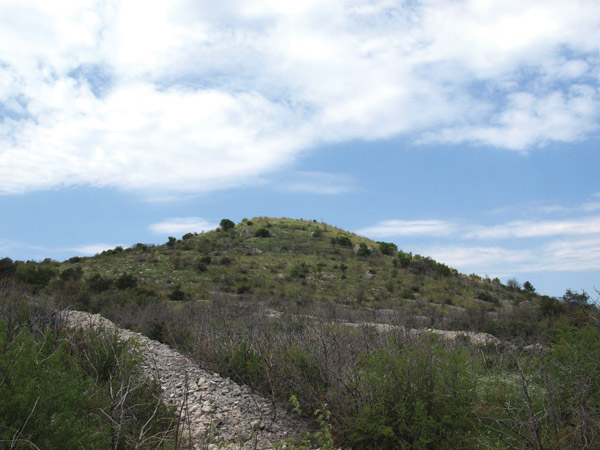
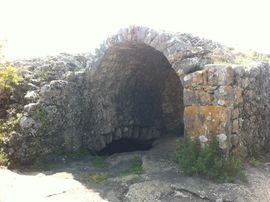
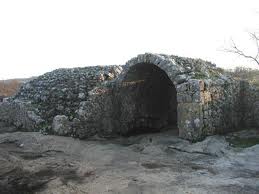
In this rich archaeological site was found about a hundred graves from pre-Roman and Roman period (2nd century to the 5.st.pr.Kr.). Here are the remains of residential buildings complex of finely cut stone, the settlement is bounded by walls and broken streets. Near the cemetery is a natural trap, vaulted into the Roman period, which locals call the Roman cistern - enclosure, and was used for water supply of the local population.
In this rich archaeological site was found about a hundred graves from pre-Roman and Roman period (2nd century to the 5.st.pr.Kr.). Here are the remains of residential buildings complex of finely cut stone, the settlement is bounded by walls and broken streets. Near the cemetery is a natural trap, vaulted into the Roman period, which locals call the Roman cistern - enclosure, and was used for water supply of the local population.
ARAUZONA (Great Mrdakovica)
Up to Archaeological sites Arauzona can be reached on foot from the T-5.
On this site was excavated necropolis with tombs from the 4th I 3 century BC, and the contents of graves, speaking eloquently about Liburnian trading spaces with the Kastela Gulf, Hvar, Vis and southern Italy.
Besides the cemetery, here are the remains of the stone complex of residential buildings constructed of finely cut stone originally joint by clay, plaster and later. Some areas were separated by streets, and the whole village was surrounded by massive walls.
ROMAN WATER TANK
Roman cistern in the nation known as the enclosure.
In fact, it is natural stone platform which stanvnici Arauzona ancient vaulted and left open for the influx of rainwater. This ensured a sufficient quantity of drinking water and prevented its contamination by wind borne particles of dust and garbage.